
Restoring Function. Embracing Life.
Dr Bryan Wang
Consultant Orthopaedic Surgeon
Trusted Orthopaedic Surgeon | Fellowship-trained in Canada | With over 20-years of experience
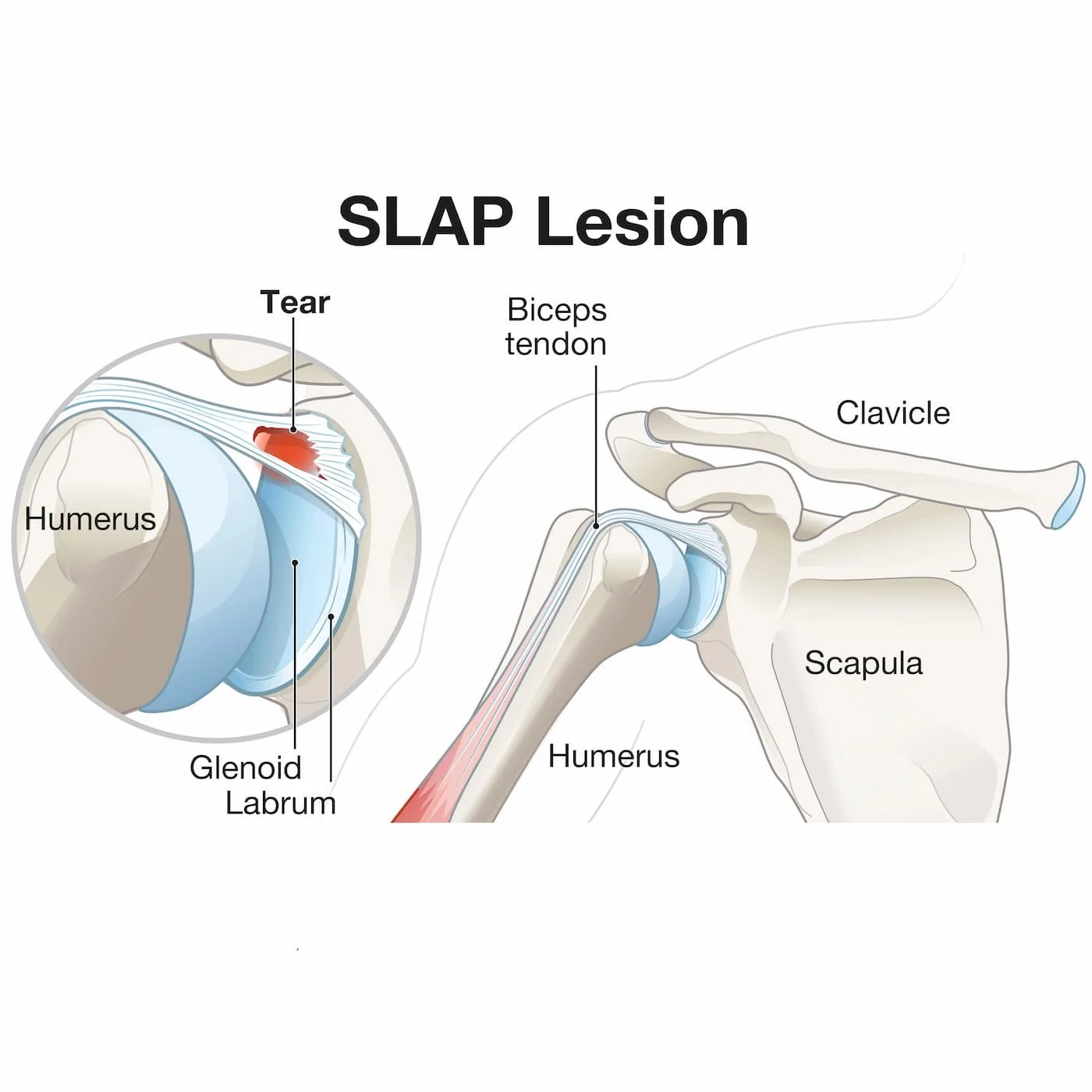
A Superior Labral Anterior Posterior (SLAP) Lesion is a tear of the top part of the glenoid labrum where the biceps tendon anchors. It commonly occurs in a fall on an outstretched hand (FOOSH) injury or sometimes with repetitive overhead sports. It causes deep shoulder pain, clicking, and loss of trust in the shoulder. It is diagnosed via specific physical tests and MRI arthrogram. Treatment ranges from targeted physiotherapy to arthroscopic repair or biceps tenodesis depending on age, sport, and associated instability.
The glenoid labrum is a tough rim of cartilage that deepens the shoulder socket and anchors key ligaments and part of the biceps tendon. When it tears, the “socket” loses its grip and depth making the joint feel loose or unstable—especially during throwing, swimming, pressing, or contact sports. Shoulder Instability can be a full dislocation (ball comes out completely) or a subluxation (partial slip that “clunks” back).
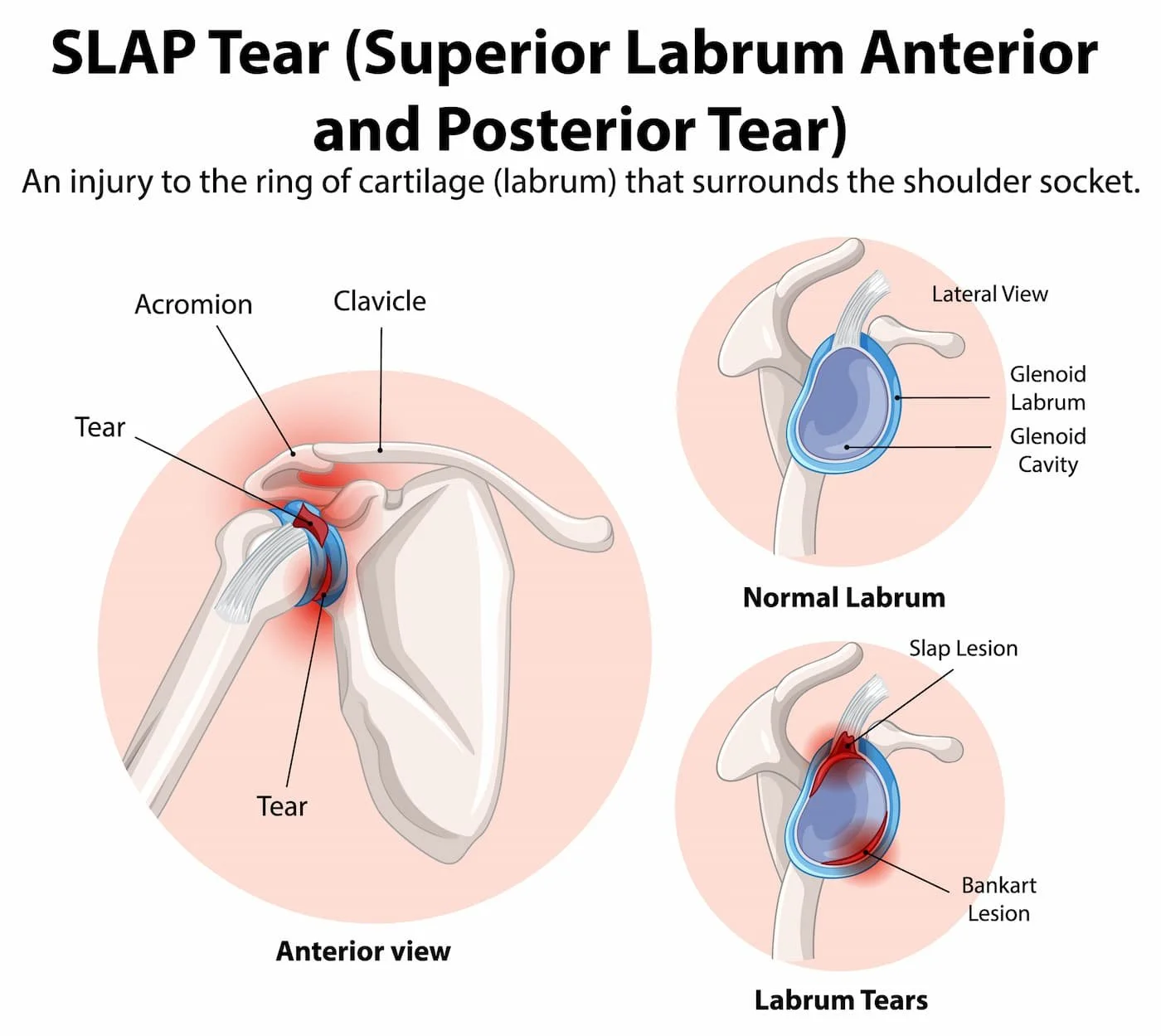
Patients with a SLAP tear may present with the following symptoms:
You might need to consult a shoulder specialist or the Accident and Emergency Department if you experience the following:
The symptoms of a SLAP lesion often overlap with other shoulder conditions like Bankart Lesion or Rotator Cuff Injury. Hence the diagnosis relies on a combination of clinical evaluation, imaging, and sometimes arthroscopy. The goal is to confirm labral involvement and identify the tear’s location and severity.
Specialist Physical Examination
Clinical history
Labral provocation tests such as:
Imaging
X-rays to screen for bony injuries (e.g., Hill–Sachs, bony Bankart)
Most patients start with non-surgical care; surgery is considered when symptoms persist, or performance goals require it.
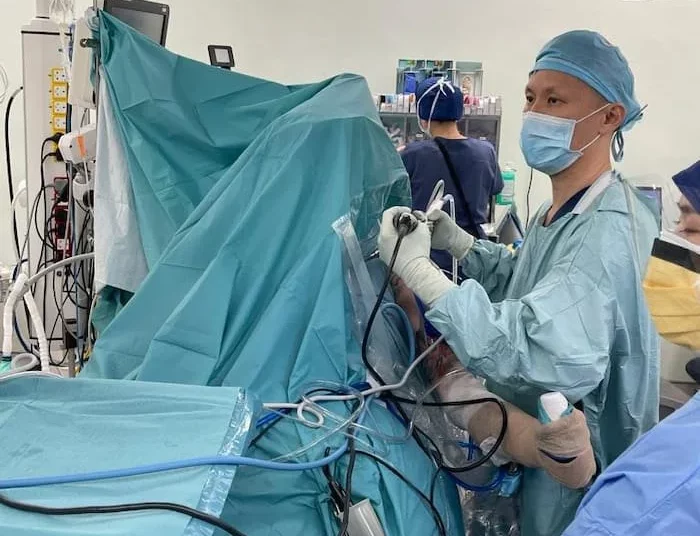
Post operative SLAP Lesion Rehabilitation following a SLAP repair depends on the surgical procedure done and any other associated pathology. The general guideline for SLAP Lesion Rehabilitation is as follows:
| Type of Lesion | SLAP Lesion (Superior Labrum Anterior to Posterior) | Bankart Lesion | Rotator Cuff Injury |
|---|---|---|---|
| Location of Injury | Top of the glenoid labrum where the biceps tendon attaches | Front-lower (anterior-inferior) labrum of the shoulder socket | Tendons of the rotator cuff muscles (usually supraspinatus) |
| Common Cause | Repetitive overhead activity, throwing sports, fall on outstretched arm | Shoulder dislocation or instability | Degeneration, overuse, or trauma (e.g. heavy lifting) |
| Typical Symptoms | Deep shoulder pain, clicking or catching, pain with overhead or throwing | Shoulder instability, repeated dislocations, sense of “giving way” | Shoulder weakness, night pain, difficulty lifting the arm |
| Physical Tests | O’Brien’s, Crank, Biceps Load, Speed’s | Apprehension and Relocation tests | Drop Arm, Empty Can, External Rotation Lag |
| Treatment Approach | Rest, physiotherapy, or arthroscopic labral repair | Arthroscopic Bankart repair to restore stability | Physiotherapy or surgical repair (depending on tear size) |
| Commonly seen in | Throwing athletes, weightlifters | Young athletes with shoulder dislocations | Older adults, manual labourers, athletes with overuse |
No. A SLAP tear involves the superior labrum/biceps anchor; a rotator cuff tear involves the rotator-cuff tendons. They can coexist but are distinct problems.
Through specialist examination (e.g., O’Brien test) and MRI arthrogram when needed to visualise the labrum and biceps anchor.
No. Many improve with targeted physiotherapy. Surgery is considered for persistent pain, functional limits, or when sport/work demands require a durable fix.
Younger overhead athletes often benefit from SLAP repair; in many adults, biceps tenodesis can provide reliable pain relief and quicker recovery. Decision depends on age, sport, tear type, and associated instability.
Those findings point to instability from dislocation. Your surgical management plan may include Bankart repair, Remplissage for an engaging Hill-Sachs, or in cases of glenoid bone loss, a Latarjet procedure.
References
Medically reviewed by:
Dr Bryan Wang, Consultant Orthopaedic Surgeon, Beacon Orthopaedics (Shoulder & Elbow, Knee & Sports Injuries; fellowship-trained; >20 years’ experience).
Last reviewed: October 2025.
Educational content only; not a substitute for personalised medical advice. Book an appointment at Beacon Orthopaedics to discuss your diagnosis and treatment options
If you’re experiencing recurrent shoulder dislocations, pain after overhead activity, or suspect a labral tear, book an appointment with Beacon Orthopaedics, Singapore.
Early, accurate diagnosis and a structured plan can get you back to work, sport, and daily life with confidence.