
Restoring Function. Embracing Life.
Dr Bryan Wang
Consultant Orthopaedic Surgeon
Trusted Orthopaedic Surgeon | Fellowship-trained in Canada | With over 20-years of experience
Shoulder bursitis, also known medically as subacromial bursitis is an inflammation of the bursa, a small fluid-filled sac that reduces friction and cushions the space between bones, tendons, and muscles near your shoulder joint. It commonly occurs due to repetitive shoulder movements, overuse, or trauma, but it can also result from underlying conditions like arthritis or infection. Injuries and overusing your shoulder are the most common causes of bursitis. Specifically, sports injuries or repetitive strain injuries are usually what cause chronic and acute shoulder bursitis.
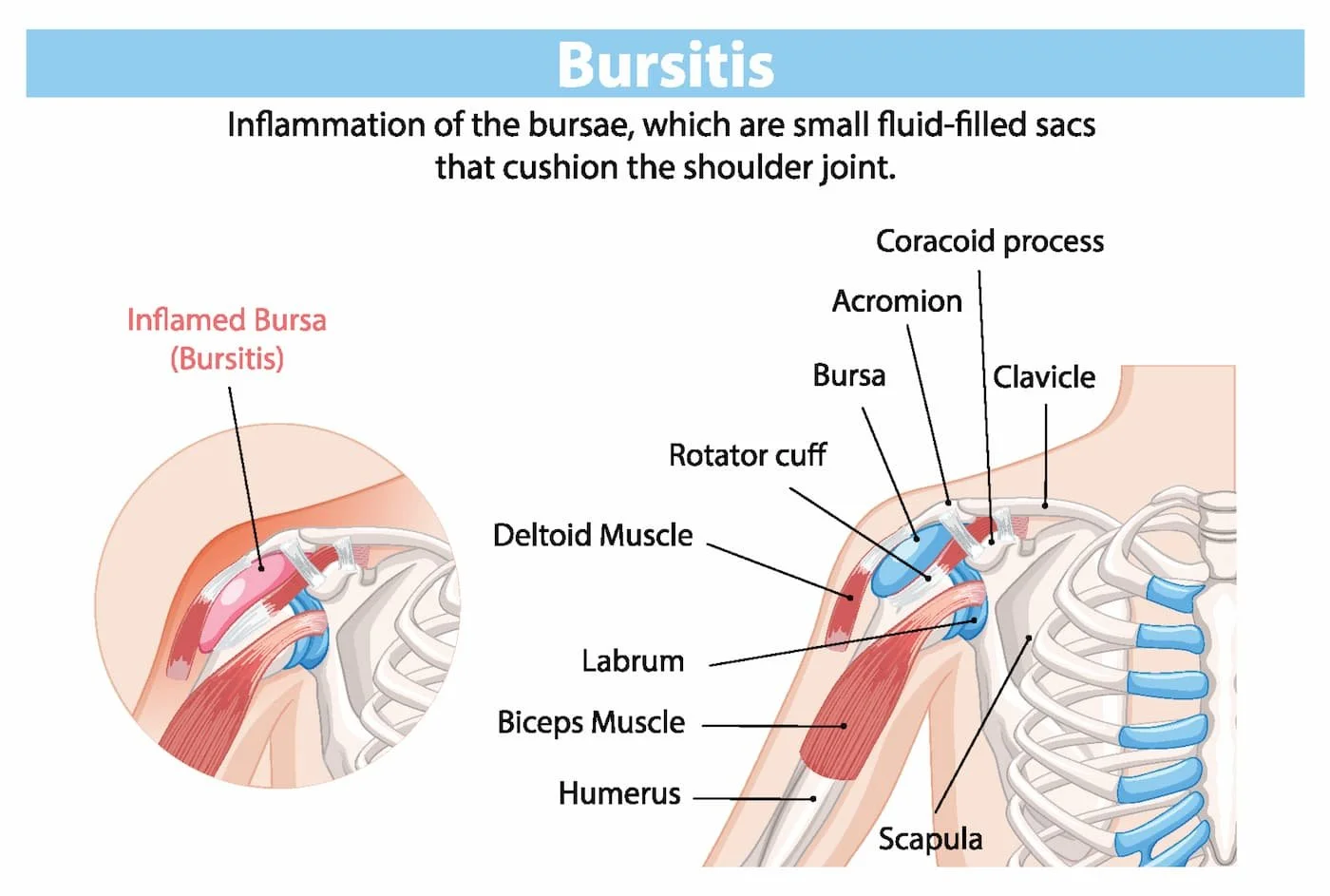
There are 3 common types of shoulder bursitis:
Chronic: Chronic is the medical name for a condition or issue that comes back (recurs). Chronic shoulder bursitis is having repeated episodes of bursitis in your shoulder, usually from experiencing similar injuries or overuse. It’s the most common type.
Acute: Acute bursitis happens suddenly as a one-off episode, usually after an injury.
Infectious (septic): This is bursitis that happens when an infection somewhere else in your body spreads to your shoulder bursae.
Patients with shoulder bursitis may present with the following symptoms:
Clinical assessment will include taking a detailed history and a thorough examination of your shoulder, identifying pain and movement limitations.
Further imaging tests like X-rays, MRI and CT scans may occasionally be required to look for inflammation in your bursae and or damage in other parts of shoulder.
If you have any of the symptoms above, it is advisable to see an orthopaedic specialist for further assessment. The appropriate treatment is decided after assessment and a collaborative discussion based on your needs. They can be broadly divided into conservative (non-surgical) and surgical options.

Non-surgical measures will usually be recommended first if you have not had any prior treatment for your shoulder bursitis and your symptoms are mild or manageable.
These may include a combination or all of the following measures:
Rest and Activity Modification
To reduce inflammation within the shoulder joint, and/or aggravate the shoulder
Cold Therapy
Ice packs to reduce swelling
Medications
Anti-inflammatory drugs to reduce pain and swelling
Physiotherapy
To strengthen the shoulder muscles and improve range of motion
Cortisone injection
This may sometimes be required if the pain is persistent
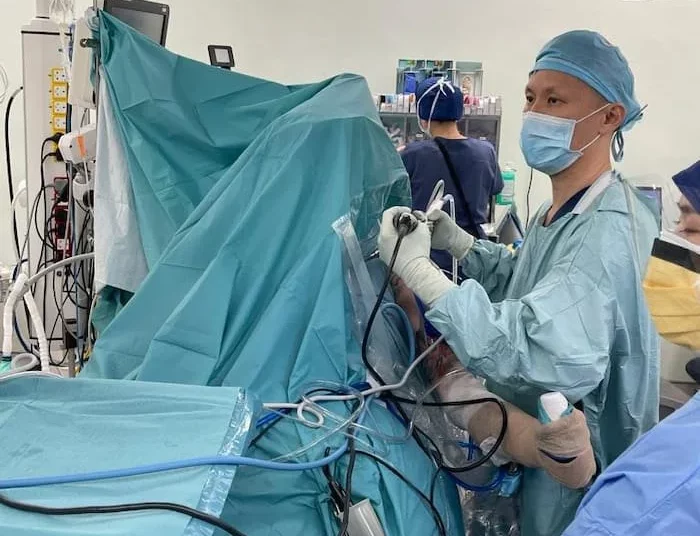
In the severe case of shoulder bursitis such as shoulder pain and weakness is persistent despite all the above measures, surgery may sometimes be required. The appropriate surgical treatment will depend on your age and functional demands, and also the underlying cause of the shoulder bursitis. You’re more likely to require surgery if you have chronic shoulder bursitis that affect your daily activities.
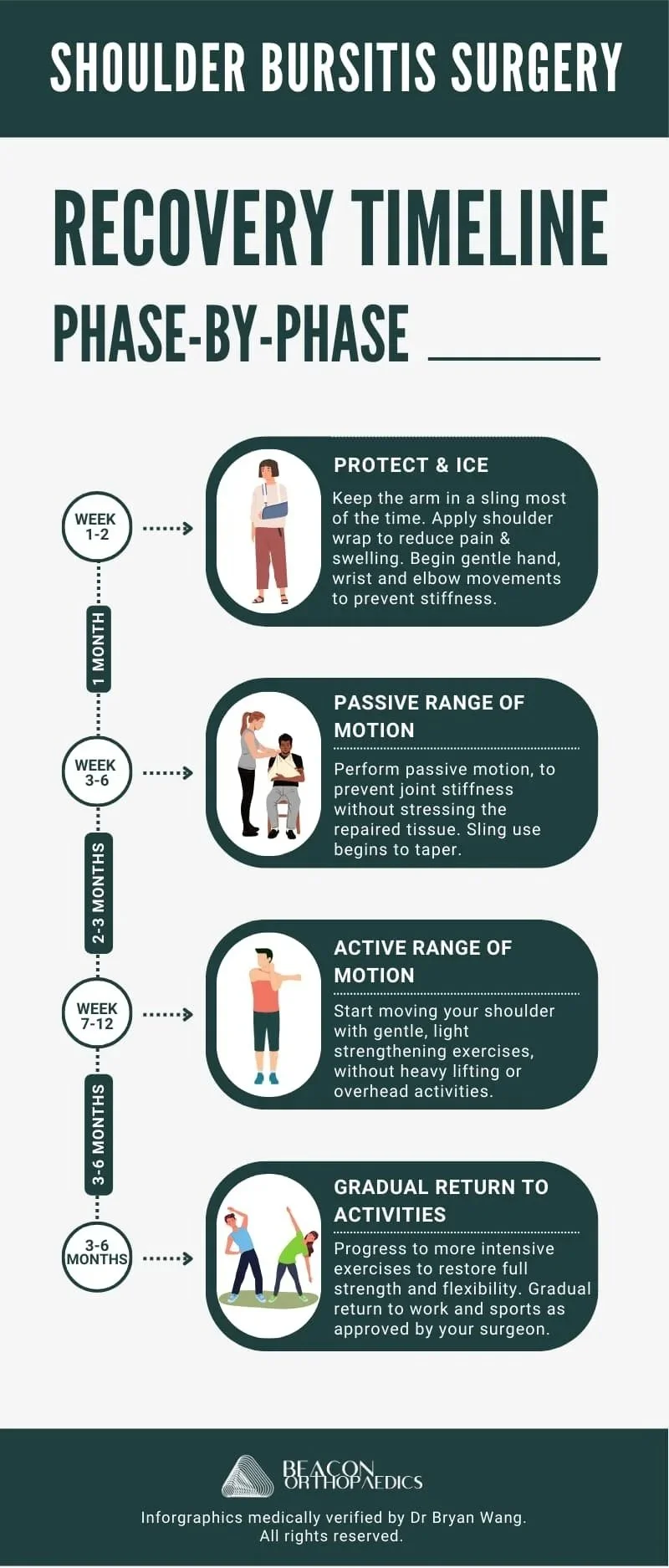
Shoulder bursitis surgery is usually done with a shoulder arthroscopy. Dr Bryan will remove or repair damaged tissue in your shoulder joint and may also remove the inflamed bursae to create more space within the shoulder. A collaborative pre and post surgery plan will be discussed so that you are aware of what to expect and how long it’ll take to recover.
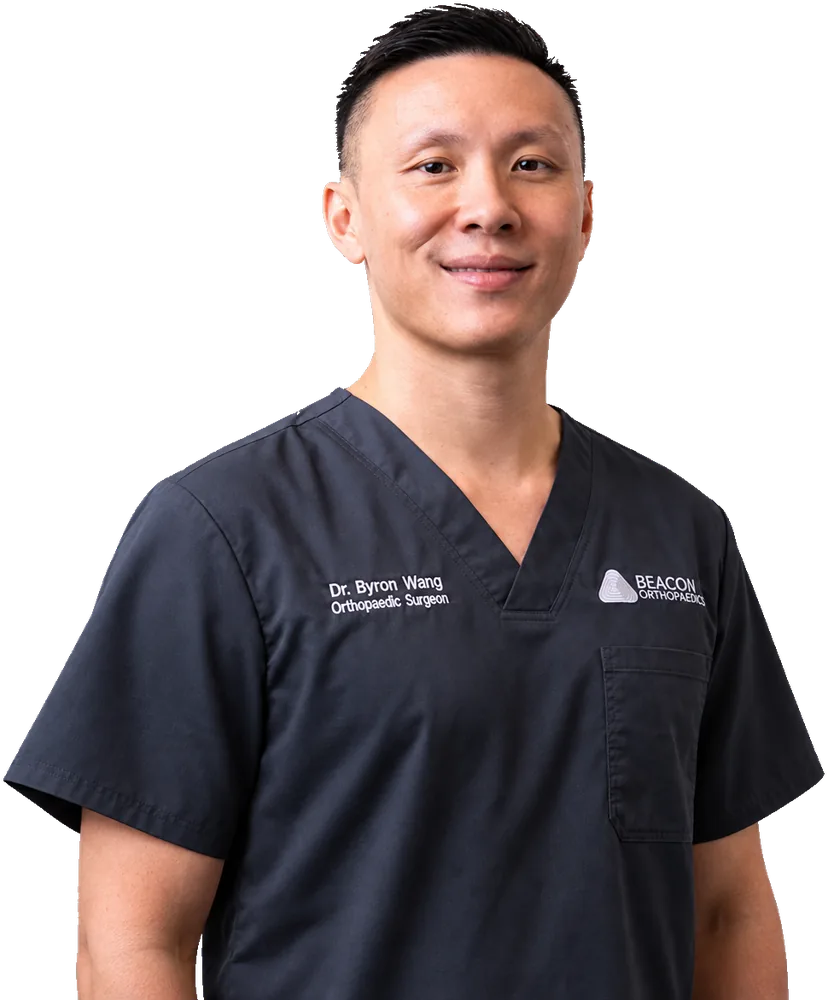
If you’re experiencing recurrent shoulder pain, swelling around shoulder joint or suspect a shoulder bursitis, book an appointment with Beacon Orthopaedics, Singapore.
Early, accurate diagnosis and a structured plan can get you back to work, sport, and daily life with confidence.