
Restoring Function. Embracing Life.
Dr Bryan Wang
Consultant Orthopaedic Surgeon
Trusted Orthopaedic Surgeon | Fellowship-trained in Canada | With over 20-years of experience
Frozen shoulder, also known as adhesive capsulitis, is a condition where the shoulder joint has a loss of motion (ie ‘frozen’). This occurs when there is thickening of the capsule surrounding the shoulder joint.
A classical frozen shoulder follows the following stages:
Freezing — starts with a significant amount of pain but has an acceptable amount of shoulder movement
Frozen — develops more stiffness and restriction in movement, but pain reduces
Thawing — gradual return of movement
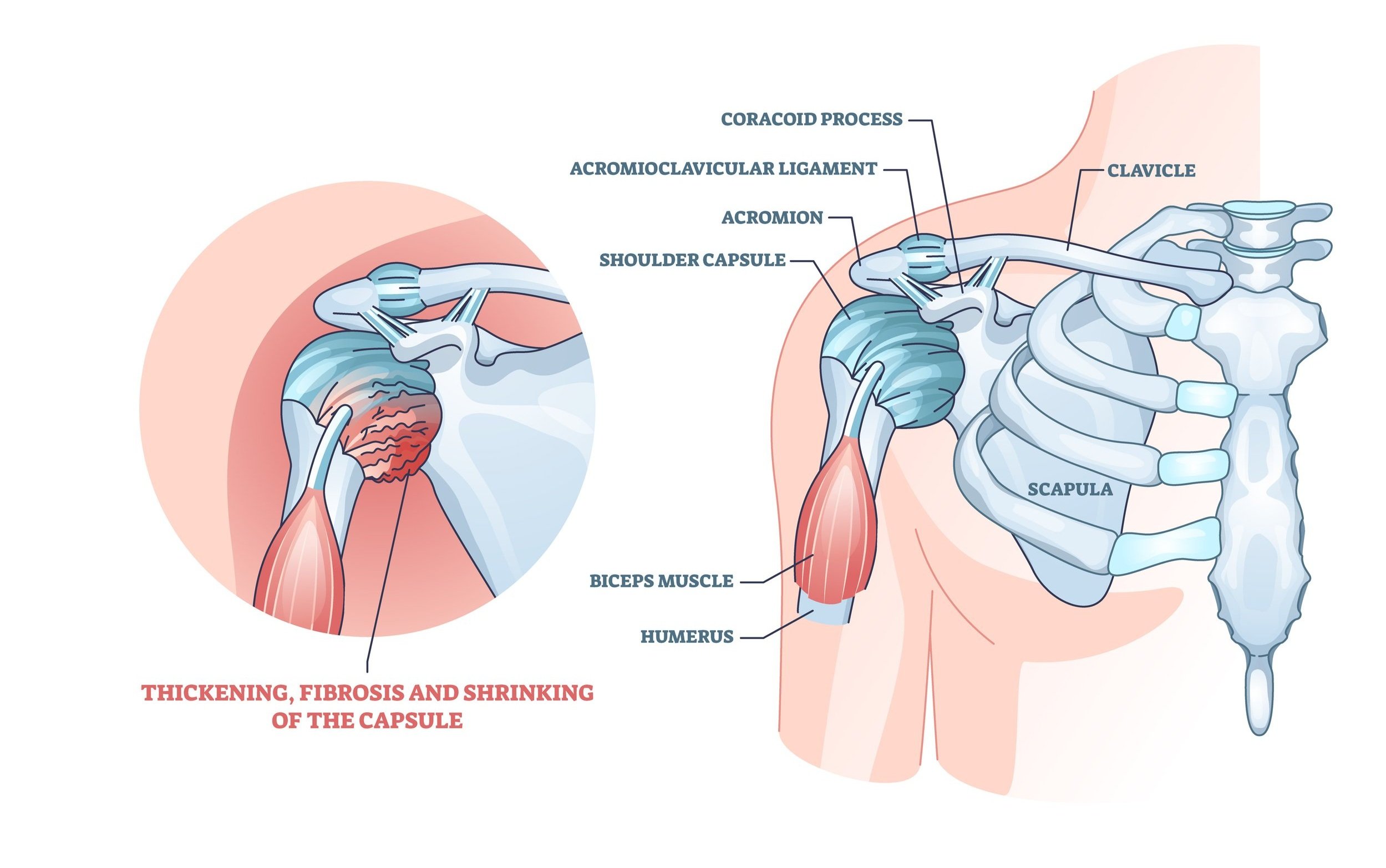
This condition can be prolonged, and it can take up to 2-3 years for full recovery. Frozen shoulder can be classified into two categories:
The primary cause of the frozen shoulder is unknown. However, research has shown people with diabetes are more prone to develop frozen shoulders. It most commonly affects people between the ages of 40 and 60, and occurs in women more often than men.
The Clear evidence of trauma and usually involves structural changes within or adjacent to the joint, such as fractures and tendon injuries.
Symptoms of frozen shoulder depend on the stage of the condition:
Clinical assessment will include taking a detailed history and a thorough examination of your shoulder.
Further imaging tests like X-rays, MRI scans and ultrasound scans may occasionally be required.
If you have any of the symptoms above, it is advisable to see an orthopaedic specialist for further assessment. The appropriate treatment is decided after assessment and a collaborative discussion based on your needs. They can be broadly divided into conservative (non-surgical) and surgical options.

Non-surgical measures will usually be recommended first if you have not had any prior treatment for your frozen shoulder. These may include a combination or all of the following measures:
Medications
anti-inflammatory drugs to reduce pain and swelling
Physiotherapy
release the adhesions and improve the range of movement
Cortisone injection
this may sometimes be required if the pain is persistent
If your shoulder pain and stiffness is persistent despite all the above measures, surgery may sometimes be required to aid your recovery.
The appropriate surgical treatment will depend on the severity of the frozen shoulder and whether there are any associated conditions (ie rotator cuff tears) that need to be addressed.
The surgery is typically performed in a minimally-invasive fashion (keyhole) and involves releasing the thickened capsule (capsular release). This is often combined with a manipulation of the shoulder to break down all remaining adhesions.
Any other associated conditions (ie rotator cuff tears) can also be addressed at the same time.
To prevent recurrence, it is important to start intensive rehabilitation after the surgery to prevent the adhesions from forming again.
If you’re experiencing persistent shoulder pain, loss of shoulder motion, or suspect a frozen shoulder, book an appointment with Beacon Orthopaedics, Singapore.
Early, accurate diagnosis and a structured plan can get you back to work, sport, and daily life with confidence.